What Makes a Good Shed Pad?
Soft ground ruins sheds. Here's what a properly graded pad looks like.

6 min read
A shed is only as good as what it sits on. Set it on soft or uneven ground and you’ll get sticking doors, sagging floors, and rot — often within a couple of years.
The Anatomy of a Solid Pad
A proper pad starts with grading: topsoil stripped, base leveled, and a slight slope for drainage.
Then crushed stone goes down in compacted layers, extending past the shed’s footprint on every side. Do it once, do it right, and your shed stays level for decades.
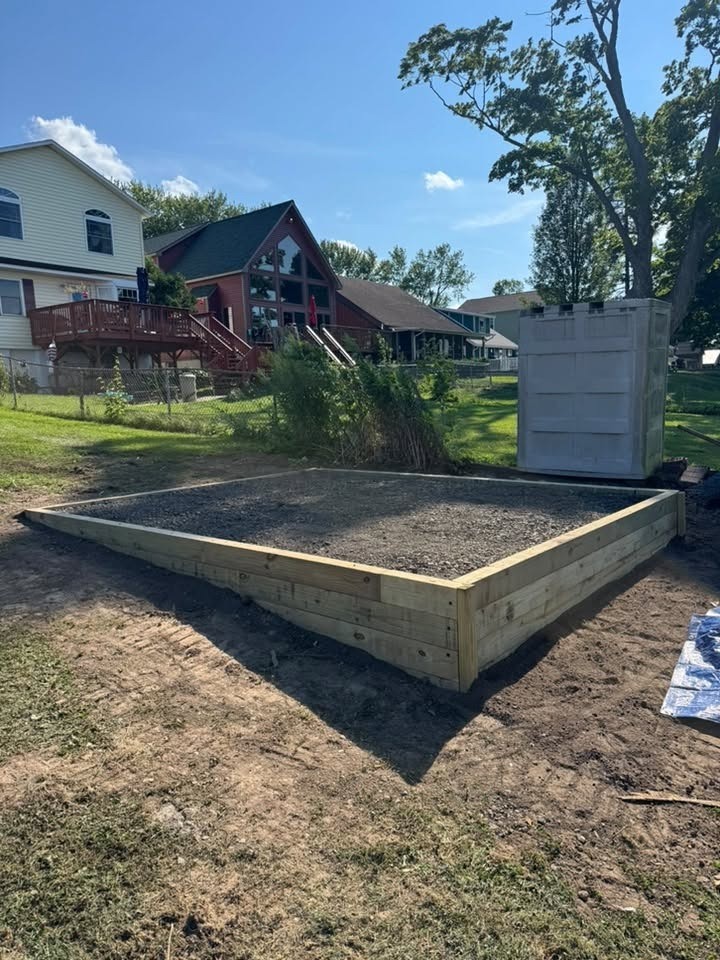
Done right, a graded stone pad keeps your shed dry, level, and off the ground — and it typically costs far less than a concrete slab.
5 Marks of a Pad Done Right
Level within an inch across the whole pad
Crushed stone, compacted — not loose fill
Extends 12+ inches beyond the shed walls
Water drains away, not underneath
Built on firm subsoil, not topsoil
More from the blog
Tips from the field — land care, driveways, and materials, straight from our crew.


